There is a common shape to a learner’s listening session. They press play on a podcast, an episode, a conversation. They follow as much as they can. The track ends. They line up the next one.
It feels like steady progress. The numbers go up — minutes listened, episodes finished. But ask the same learner a week later what stuck from any given episode, and most of it is gone.
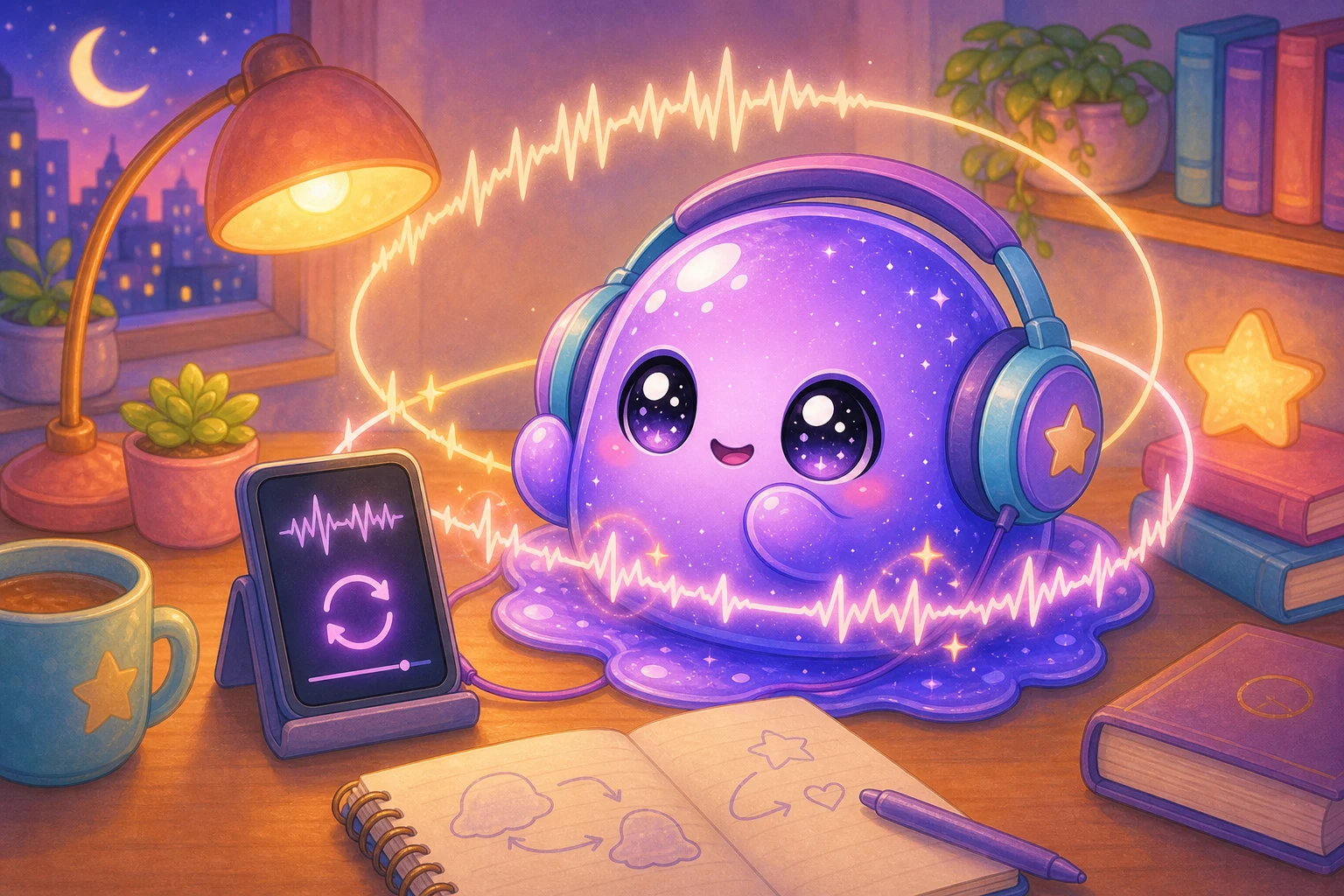
The fix is small and unglamorous: listen to the same thing twice.
What changes the second time
The first listen is mostly orientation. The brain is busy figuring out who is speaking, what the topic is, what the cadence sounds like. There is barely any spare attention left for individual words.
The second listen frees that up. You already know what is being said, so you can finally hear how it is being said. The connector you missed, the elision that turned three words into one, the politeness marker that sounded like noise the first time — they all become audible.
This is the difference between hearing language and noticing it.
Why one pass feels enough
Single listening feels complete because comprehension feels good. You followed the gist. You laughed at the joke. The end credits rolled and nothing was missing.
But comprehension and acquisition are not the same thing. Comprehension is I got the meaning. Acquisition is I could say this myself. The first happens in a single pass. The second almost never does.
A learner who only ever listens once is training the version of themselves who can understand native audio. A learner who listens twice is training the version who could produce something like it.
The shape of a useful re-listen
A second pass does not need to be a study session. It just needs a slightly different posture:
- listen without subtitles after listening with them
- pause once or twice on a phrase that felt neat
- repeat a sentence out loud the way the speaker said it
- write down one expression — not five — that you want to keep
The goal is not to extract everything. It is to let one or two small things attach. That is already more than the first pass gave you.
The same logic, by the way, is why short dialogues are easier to absorb than long ones. A two-minute scene rewards a second listen. A forty-minute episode is too long to replay, so the noticing never happens. If your material is too big to revisit, that is information about the material, not about you.
When once is enough
Re-listening is not always the right move. Sometimes a single pass is fine:
- when the material is well above your level and another pass will not help
- when you are listening for content, not for language
- when you have already moved on and forcing a re-listen would feel like a chore
In those cases, let it go. The point is not to listen to everything twice. The point is to notice when something was just at the edge of becoming useful — and to give it one more chance before moving on.
The practical rule
If a learner has to choose between a fresh episode and replaying the last one, the safer answer is usually this:
The second listen teaches more than the first.
New input feels like progress because there is more of it. But language sticks through familiarity, not novelty. The second time you hear something is when it starts to belong to you.